Shelf Life: The Case Against Calling UK-Made Manga a Genre of Its Own
There is a sentence that keeps turning up in reviews of UK-made manga. It usually arrives with a raised eyebrow: it is surprisingly good, and very British. On paper, that reads like praise. In practice, it lands like a pat on the head. The work is being judged as a curiosity first and a comic second.
That is the problem with the phrase 'British manga' in 2026. It is not that the label is wrong. Plenty of creators in the UK work in the manga idiom: big eyes, speed lines, emotional close-ups, page turns that land like a drumbeat. The issue is what the label does once it leaves the artist's mouth and lands on a shelf, a review or a convention banner.
A signpost that became a warning sign
The label started as a way to help. Search for manga made in the UK and 'British manga' gives you a route in. It tells a reader they are about to open something drawn in a Japanese visual language but shaped by British streets, weather and humour. For a small-press creator trying to explain their work at a table, it is shorthand. For a librarian building a display, it is a category. For a festival programmer, it is a line in a brochure.
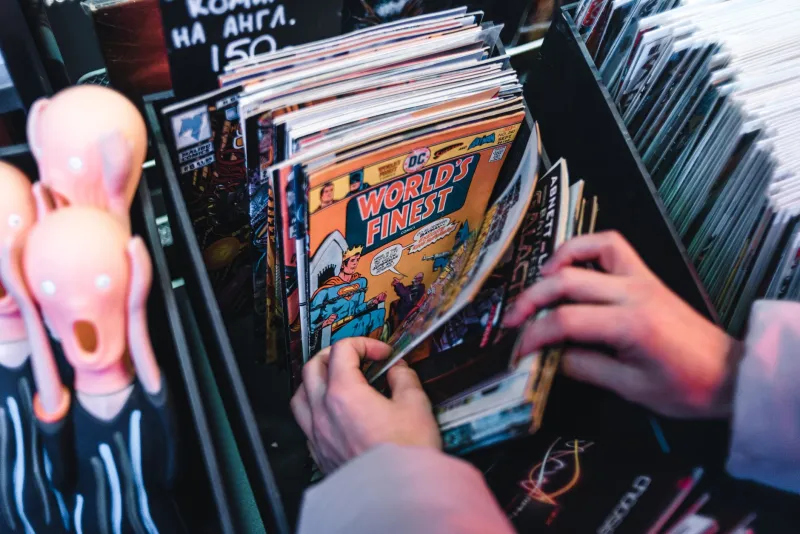
Then it becomes a fence. A buyer at a northern comic shop told me that UK creator titles often end up in the local creators section rather than the manga shelf. The intention is supportive. The effect is segregation. A romance with manga pacing sits next to memoir and steampunk zines instead of the manga it is actually in conversation with. Readers who came for chainsaw monsters and school festivals do not find it. Readers who find it are told, quietly, that it is a different thing.
The novelty tax
The review language gives the game away. A UK creator is rarely reviewed as a manga artist. They are reviewed as a British manga artist. The question is never whether the panel timing works or whether the emotional beat lands. It is whether the book feels British enough, or too British, or not British in the right way. That is a novelty tax. It asks the work to justify its passport before it has been allowed to be a comic.
Indie publishers feel the same squeeze. The label can open doors with arts councils, local bookshops and heritage grants. It can also narrow the pitch. A horror manga becomes a British horror manga. A sports story becomes a British sports manga. The modifier starts to eat the genre. Artists I have spoken to for this piece do not object to being from the UK. They object to being from the UK as a marketing hook.
What readers actually want
Readers are less complicated than the industry sometimes pretends. They want a good book. They want a cover that makes them pick it up, a story that keeps them there and a creator they can follow. The UK detail is not a gimmick. It is texture: a bus stop, a rainy Saturday, a corner shop, a family argument that sounds like home. That texture should be part of the work, not a warning label on the front.
The strongest UK-made manga I have read in 2026 does not announce its nationality. It uses the grammar of manga to say something specific. It trusts the reader to meet it halfway. The moment a review calls that 'surprisingly good for a British manga', it has already told the reader to expect less. That is not fair to the creator, and it is not useful to the reader.
Sharper, fairer language
So what should we say instead? Start with the work. Call it a manga, a comic, a graphic novel, a horror story, a romance. Then say where it was made. 'Manga by UK creators' is accurate. 'UK-made manga' is clear. 'Manga from the UK' does the same job without the raised eyebrow. Keep 'British manga' for the scene, the community, the table at a convention, the group of people making the work. Do not use it as a genre.
Shops can help by shelving UK creator manga with manga, not away from it. Reviewers can help by reviewing the book first and the passport second. Publishers can help by pitching the story before the postcode. None of this is about pretending nationality does not matter. It is about making it matter in the right way.
Old enough to stand on its own
The UK scene in 2026 has conventions, small presses, library events, zine fairs and a generation of readers who grew up on official releases and scanlation alike. It is not a novelty any more. It is a mature part of the wider manga tradition, with its own voices and its own arguments. The label can stay as a way in. It should not stay as a ceiling.
At Vyvymangaa, we are not going to pretend that where a book is made is irrelevant. It shapes the light, the jokes, the references, the small details that make a page feel lived in. But it is not a genre. It is not a quality mark. It is not a punchline. UK creators are making manga. Let us put it on the shelf and call it what it is.